Health Canada reports 1,393,380 square metres of licensed indoor cannabis growing area, and that single indoor figure includes greenhouses. So when an importer in Berlin or Sydney asks whether a Canadian batch was grown indoors, the public licensed-area data can't answer the question. Your supplier's paperwork has to.
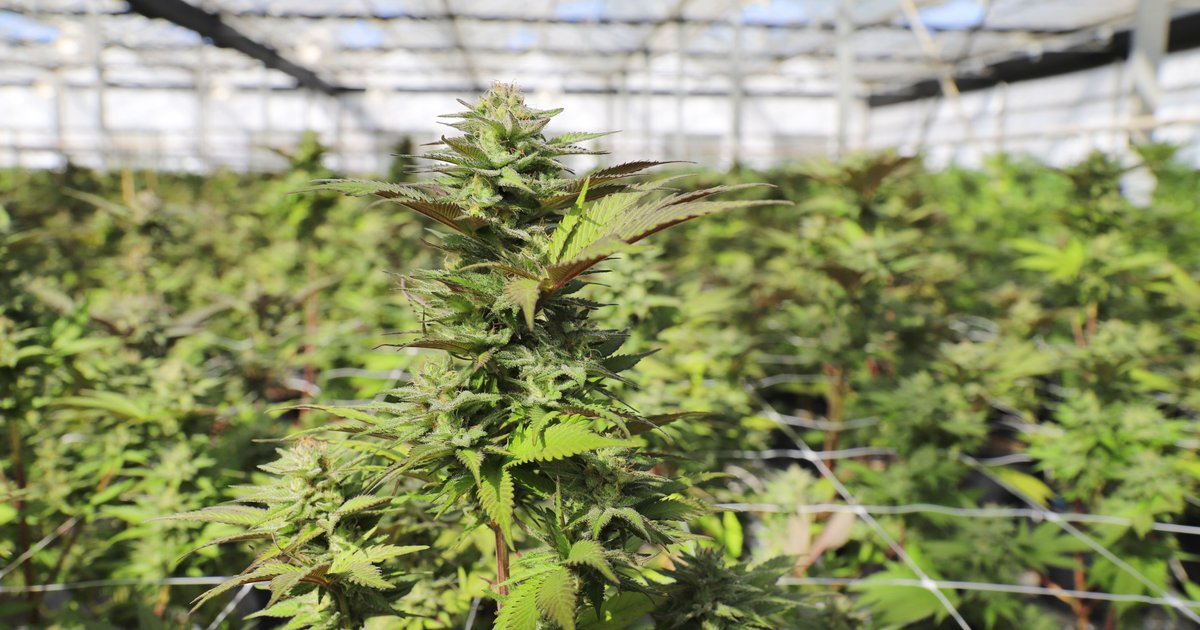
Indoor vs greenhouse cannabis comes down to control versus cost. Indoor rooms give a grower full command of light, temperature, humidity and airflow, which narrows batch-to-batch variation and lowers mould pressure. Greenhouses use sunlight and cost less per gram to run. They can meet EU-GMP too, but they carry more seasonal swing and more airborne fungal load for the quality system to manage.
For export buyers, the growing environment matters less than whether the batch data proves the result. That puts the burden on documentation, and on four checks that belong in every specification before you sign a purchase order.
Indoor vs greenhouse cannabis at a glance
Both environments put the plant under a roof. The difference is how much of the growing climate the producer controls, and how much the weather still decides.
| Factor | Indoor | Greenhouse |
|---|---|---|
| Light source | LED or HPS fixtures, fixed photoperiod | Sunlight, often supplemented |
| Climate control | Full control of temperature, humidity, CO2, airflow | Partial, shifts with the season |
| Airborne mould pressure | Lower, with sealed air handling | Higher, with more outside air exchange |
| Batch-to-batch consistency | Tighter across the year | Wider between summer and winter harvests |
| Energy use per gram | Highest | Lower, since the sun supplies most light |
| Cost per gram | Higher | Lower |
| EU-GMP and GACP fit | Yes, with documented controls | Yes, with documented controls |
Neither column wins outright. For greenhouse product, the mould and seasonality rows deserve the hardest look during supplier qualification.
Where greenhouse flower wins and where it struggles
Greenhouses aren't a second-tier option on paper. In March 2022, Pure Sunfarms received EU-GMP certification from the Bezirksregierung Düsseldorf for Delta 3, a 1.1 million square foot greenhouse in British Columbia. First German shipments were targeted for later that year. Certification turned on the quality system and its records.
The cost and energy case
The economics favour sunlight. A 2021 Colorado State University study in Nature Sustainability put the life-cycle emissions of US indoor cannabis at 2,283 to 5,184 kg of CO2-equivalent per kilogram of dried flower. Much of that comes from electricity for lighting and climate control. Greenhouses avoid most of that load, and it shows up in their cost per gram.
Grid mix changes the carbon side of that math. Quebec runs almost entirely on hydroelectric power, so a Montreal indoor room carries a far smaller carbon load per kilowatt-hour than the US facilities in that study. Operating cost per gram stays higher either way.
The mould and seasonality problem
The weakness is microbial. In a 2019 survey of commercial cannabis facilities, published in Frontiers in Plant Science, Zamir Punja's team at Simon Fraser University measured airborne mould. Greenhouse samples reached 30 colony-forming units per plate, against a maximum of 1 in indoor rooms. The same team recorded Botrytis bud rot in a greenhouse operation and saw mould counts on greenhouse buds rise from 5-10 to 25-30 units per plate after mechanical trimming.
A 2024 paper from the same group adds the seasonal angle: warm, humid summers favour Fusarium and Pythium in greenhouses, while cool, humid winters favour powdery mildew. Synthetic fungicides aren't available for cannabis, so growers rely on reduced-risk biological products. That's why a greenhouse supplier's integrated pest management program deserves a close read.
What indoor doesn't fix
Indoor isn't a guarantee either. A 2023 study in Molecules compared genetically identical plants and found more oxidised and degraded cannabinoids in the indoor samples. The sun-grown samples carried more sesquiterpenes, such as beta-caryophyllene and alpha-humulene. A poorly run indoor room still produces poor flower.
The 4-point environment check for export buyers
Whatever the cultivation method, an importer's job doesn't change: prove the batch meets specification before it ships. These four checks close the gaps that the growing environment opens up.
1. Get the growing environment in writing
Because the public data folds greenhouses into indoor area, the word "indoor" on a sales sheet isn't proof. Request the site description from the supplier's site master file or GACP documentation, and confirm it matches the licensed site. Our GACP certification checklist for B2B buyers lists what that documentation should contain.
2. Compare microbial results across seasons
Ask for total yeast and mould results from at least one summer harvest and one winter harvest, tested by an ISO/IEC 17025 accredited laboratory. One clean certificate of analysis covers one batch, while a year of results shows how the facility handles summer humidity and winter mildew pressure.
3. Confirm whether the flower was irradiated
Higher mould pressure pushes some producers toward gamma or electron-beam treatment to bring counts down before release. Acceptance varies by market and by buyer, so treatment has to be declared up front. Our guide to cannabis irradiation and export flower standards sets out how importers handle it.
4. Match trim method and moisture to the environment
The Simon Fraser data showed mould counts climbing after mechanical trimming, which makes trim method a real quality variable for greenhouse lots. Our comparison of hand-trimmed vs machine-trimmed cannabis covers the trade-offs. Then check water activity and moisture limits, because flower stored outside its target range invites mould growth in transit.
A supplier that can't answer these four points quickly has told you something more useful than any growing-method label.
How growing environment shows up in price and supply
Germany imported 201,094 kg of medical cannabis in 2025, and Canada supplied 93,006 kg of it, roughly 46%, according to StratCann's analysis of German import data. At that volume, importers are buying across a wide price band. In an October 2025 interview, German importer Remexian Pharma put flower in that market at roughly €3.50 to €12 per gram, depending on strain and quality.
Cost per gram tends to decide tenders at the lower end of that band. At the top, buyers pay for bag appeal, terpene retention and consistency between lots, which is where tightly controlled indoor, hand-trimmed flower is positioned. Our breakdown of what drives bulk flower pricing goes further on the numbers.
If you're building a premium formulary line, don't source it from a facility whose mould results swing with the seasons. The discount rarely survives the first rejected batch.
AlphaLeaf is a Montreal-based Health Canada Licensed Producer growing premium flower in an indoor facility. Every batch is hand-trimmed, tested by an ISO/IEC 17025 accredited laboratory and fully traceable. We also hold export authorisation under the Cannabis Act for supply into German and other EU medical import channels.
Reviewing suppliers for your next contract? Contact the AlphaLeaf team for batch documentation, or learn how we grow.
Frequently Asked Questions
Is indoor cannabis better than greenhouse cannabis for export?
Not automatically. Indoor cultivation gives tighter control of climate and lower airborne mould pressure, which helps batch consistency. Greenhouse flower can meet EU-GMP and GACP standards too, so buyers should judge each supplier on batch data rather than the growing method alone.
Can greenhouse-grown cannabis be EU-GMP certified?
Yes. Pure Sunfarms received EU-GMP certification in March 2022 for Delta 3, its 1.1 million square foot greenhouse in British Columbia. Certification depends on the quality system and its documentation, not on whether the canopy sits under glass or a solid roof.
Does Health Canada separate greenhouse and indoor cannabis in its data?
No. Health Canada's licensed-area data reports indoor and outdoor growing area, and greenhouses are counted within the indoor figure. Buyers who need to confirm the growing environment should ask the supplier for its site documentation.
Why does greenhouse cannabis carry a higher mould risk?
Greenhouses exchange more air with the outside and shift with the seasons, so fungal spores and humidity are harder to control. Research on commercial facilities has found higher airborne mould counts in greenhouses than in indoor rooms, with powdery mildew and bud rot as recurring threats.
What should B2B buyers request to compare indoor and greenhouse suppliers?
Request written confirmation of the growing environment, total yeast and mould results from summer and winter harvests, disclosure of any irradiation, and trim method and water activity data. Results should come from an ISO/IEC 17025 accredited laboratory.